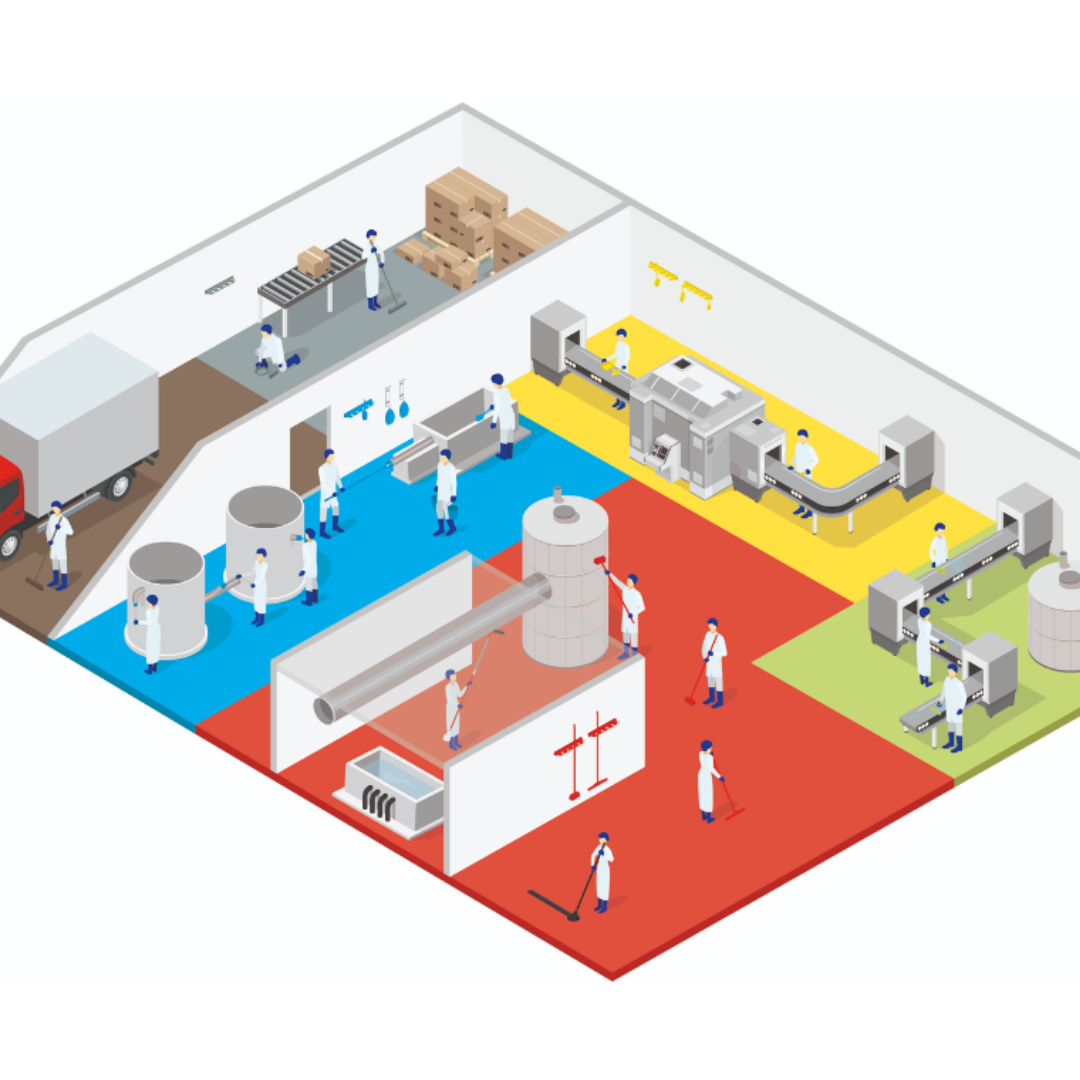

Implementing a Color-Coded Cleaning Plan promotes organization and cleanliness! There are a variety of different methods for color coding the tools! Color Coded Cleaning equipment, food handling equipment, and other tools enable the facility to reduce the risk of cross-contamination.
Here are some tips for implementing color-coded cleaning:
|
The System: - Color Coded Cleaning Plans can organize tools by use, areas, shifts, allergens, or contamination risk. There are many ways color-coded tools can be organized! - For example, you can use red for high-risk areas, such as toilets and bathroom surfaces, green for food prep or kitchen areas, or blue for general surfaces. |
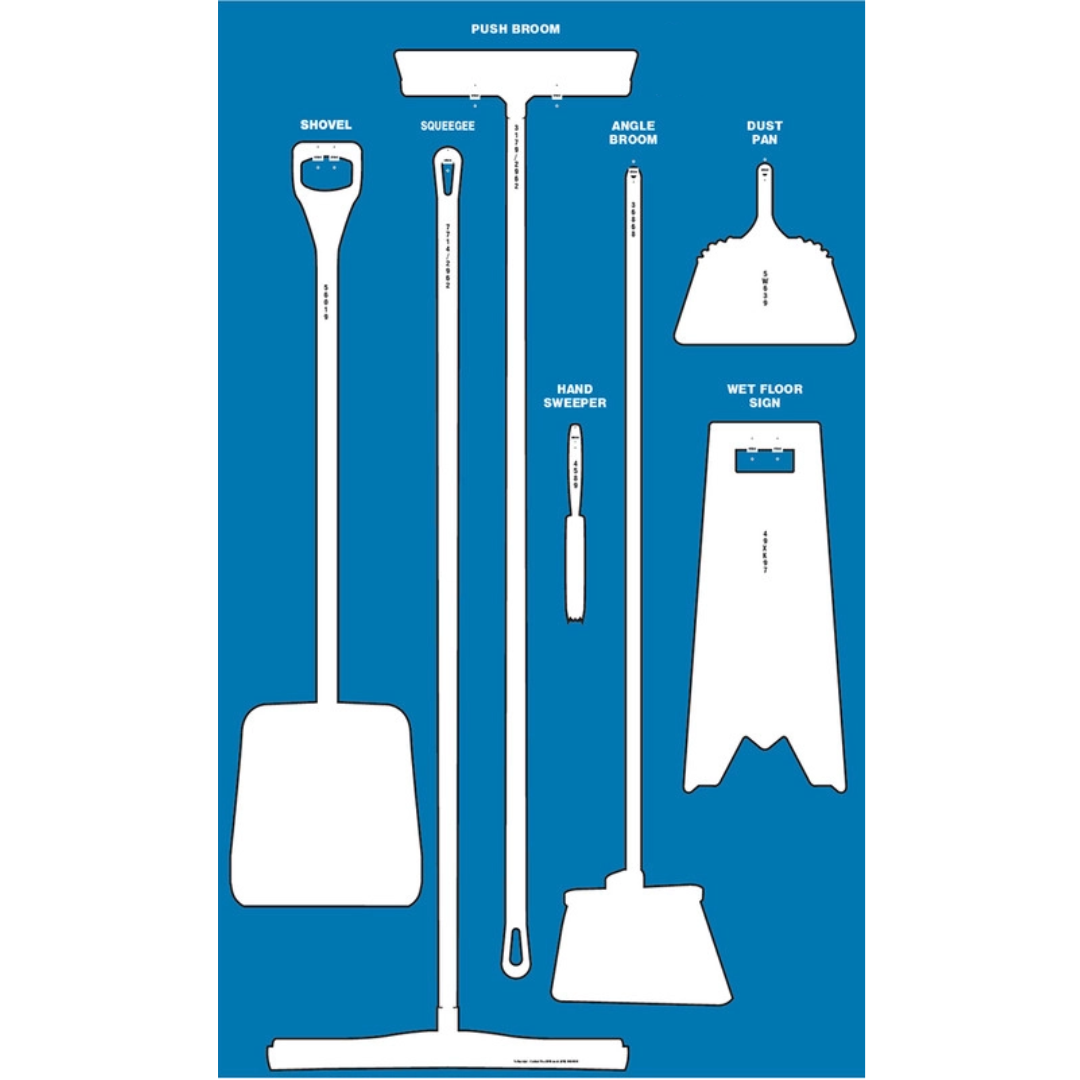 |
Organization: - Use Signs to make it Clear! Support your color-coding system with ample signage to ensure it is followed correctly. - Develop a key or chart that easily outlines the color-coded system. Make sure it is prominently displayed and easily accessible to all. |
 |
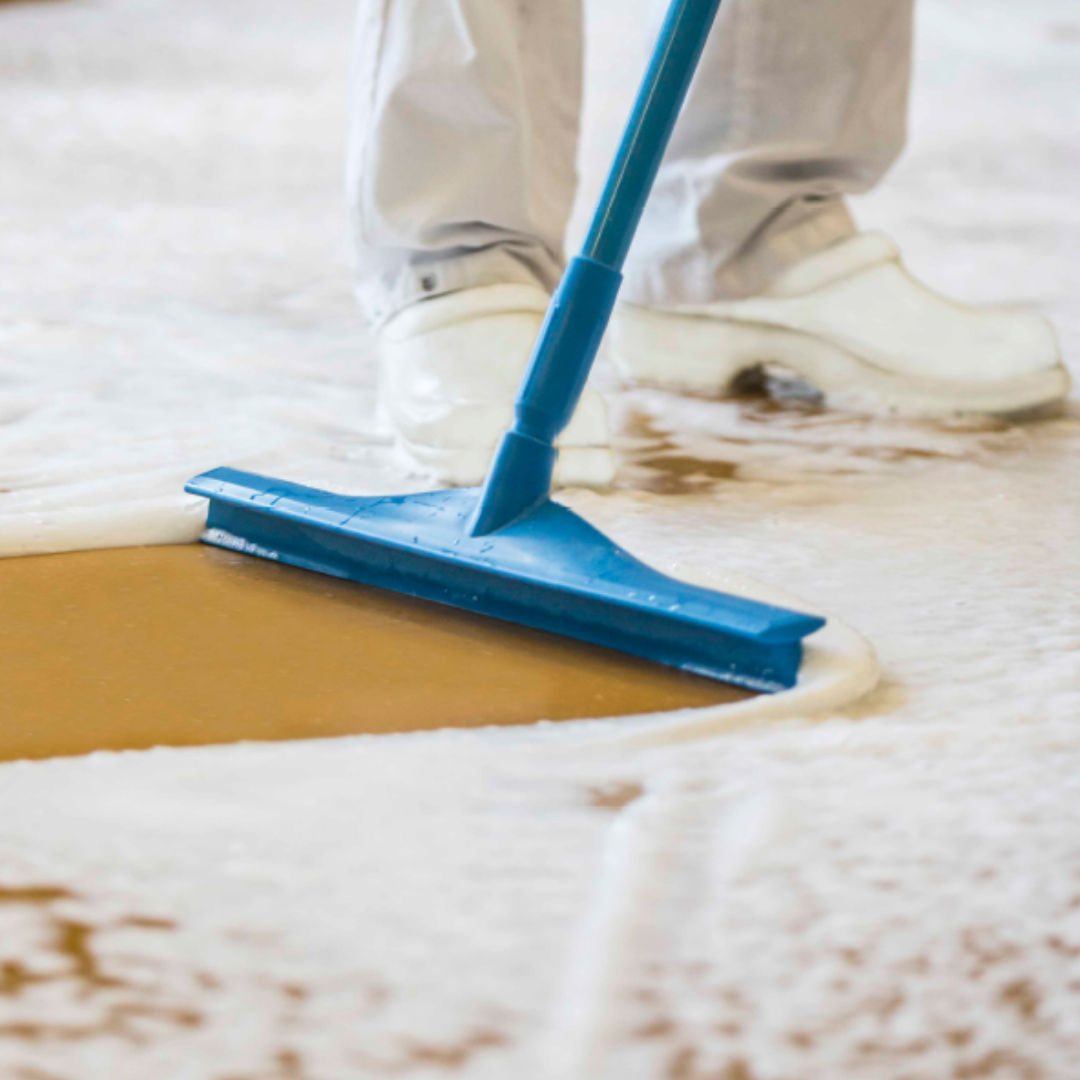
Usage: - Choosing the most efficient product for a given job is essential. - There are a variety of brushes, broom, scrapers, squeegees, scoops, and shovel all designed for different application. - Scrapers and Squeegees are designed to handle wet environments. - Scoops and Shovels are designed for handling dry goods. - Brushes and brooms are designed for different applications. |
 |
Education: - Provide training and education to your staff about the color-coded system and its purpose. - Make sure everyone understands the designated colors and their corresponding areas or surfaces. |
 |
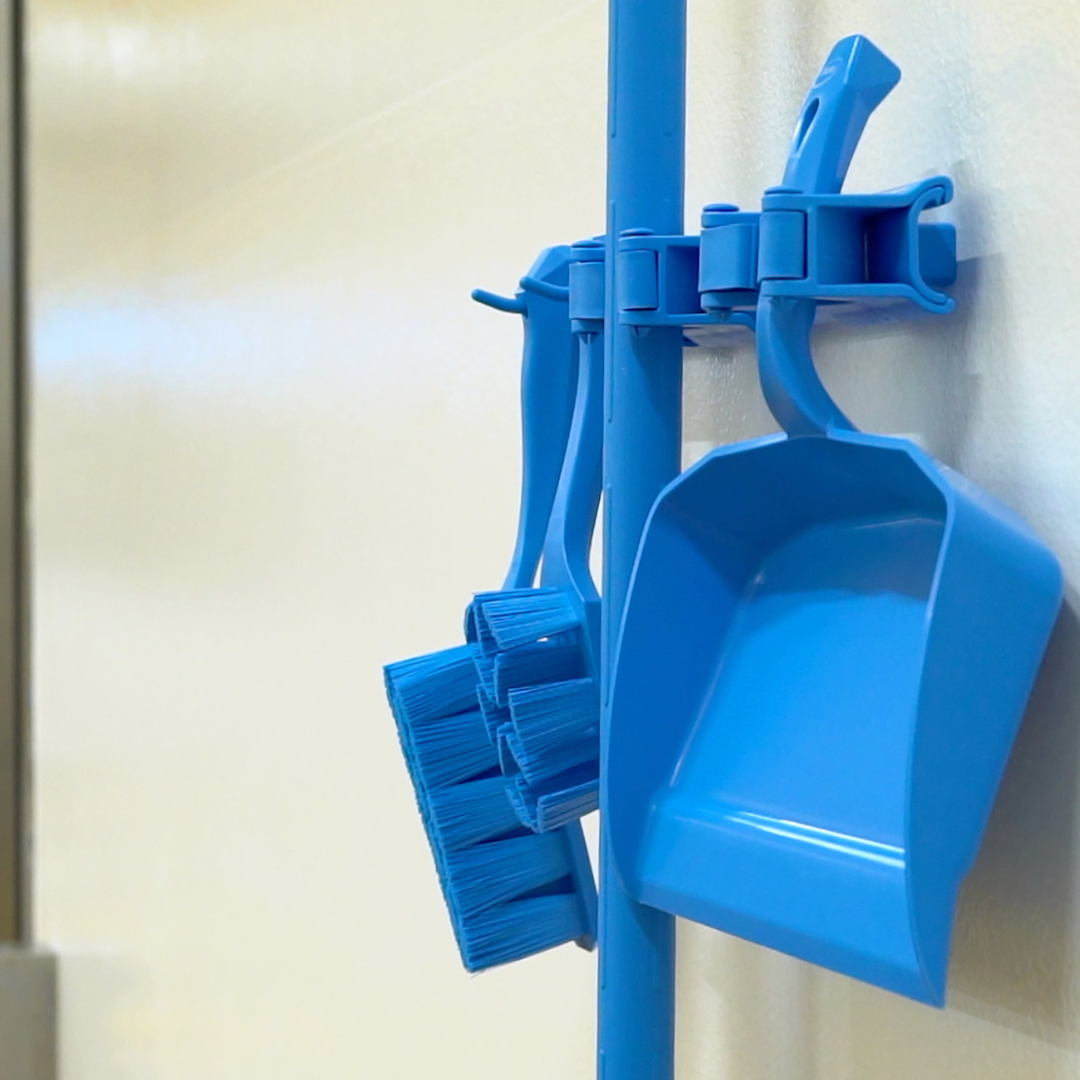
Sanitation: - Regularly clean and sanitize your color-coded cleaning tools to maintain hygiene. This prevents cross-contamination between different areas or surfaces. - Store the color-coded cleaning tools and materials separately to avoid mix-ups. |