In the world of food processing,
ensuring safety and hygiene are imperative to ensure quality products! Personal
Protective Equipment (PPE) protects both the wearer of the equipment and the consumer!
When choosing PPE, the risks must
be evaluated. Some common risks for Food Processing are physical, chemical, and
biological risks. Physical risks are any hazards that can cause direct accidents
or injuries to the user. Chemical Risks are accidents that can happen when handling
toxic, dangerous, or irritative substances. Biochemical risks are associated
with viruses, cross-contamination, and other pathogens that are particularly
hazardous in food production for the worker and the end user!
Selecting Personal Protective
Equipment (PPE) for food processing involves evaluating potential hazards. Conduct
a risk assessment to determine potential hazards and risk levels in the work
environment. Based on this, choose appropriate PPE that protects against common
hazards or risks, and adhere to safety regulations from OSHA or the FDA. Ensure
employees are trained on proper PPE usage and maintenance, regularly evaluate
PPE effectiveness, and maintain hygiene standards by cleaning and sanitizing
PPE regularly.
Types of Personal
Protective Equipment (PPE):
|
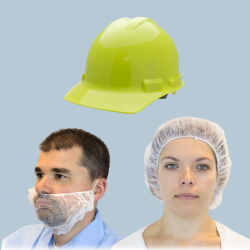
Head Protection & Hair Restraints:
-
Bouffant &
Beard Covers: Prevent hair from contaminating food products by covering
and containing hair.
-
Hard
Hats: Protect the head from falling objects, bumps, and electrical
hazards.
|
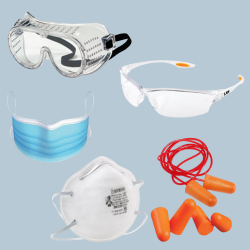 |
Eye, Hearing, and Respiratory Protection:
-
Safety Glasses: Protects
eyes from splashes, debris, and dust that may cause eye irritation or injuries.
-
Ear Plugs: Reduce
exposure to loud noises, protecting workers from hearing damage in noisy
environments.
-
Masks: Protect
against inhalation of dust, fumes, and airborne contaminants, maintaining
respiratory health.
|
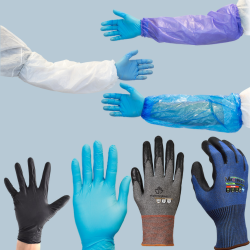 |
Hand & Arm Protection:
-
Disposable Gloves:
Disposable gloves are convenient and
cost-effective for tasks requiring frequent glove changes to prevent
cross-contamination.
-
Cut
Protection Gloves: Cut protection gloves are specifically designed to
safeguard against cuts, lacerations, and punctures. They are constructed with
materials that provide varying levels of cut resistance.
-
Sleeves:
Disposable
Sleeves are used to maintain
dryness and hygiene standards. They limit exposure to food products,
liquids, and grease associated with food processing.
|
|
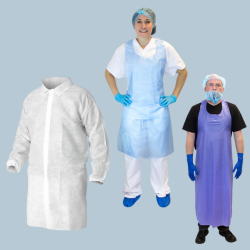
Body & Clothing Protection:
-
Aprons: Disposable
aprons are commonly used in food processing for their convenience and ability
to prevent cross-contamination.
-
Lab
Coats: Lab coats are made from more durable fabrics to provide a more
substantial barrier against spills and splashes.
|
|
Foot Protection:
-
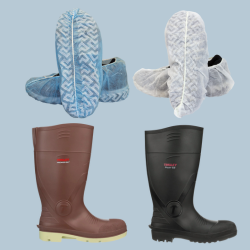
Shoe Covers:
Disposable shoe covers can be worn over regular footwear to prevent
contamination of food processing areas and maintain hygiene standards.
-
Boots:
High-performance work boots are waterproof, slip-resistant, tough, and
comfortable. Protect your feet and minimize the risk of slip and fall
accidents! Steel-toed boots protect against impact and compression hazards,
while slip-resistant footwear ensures stability on wet or greasy floors.
|